
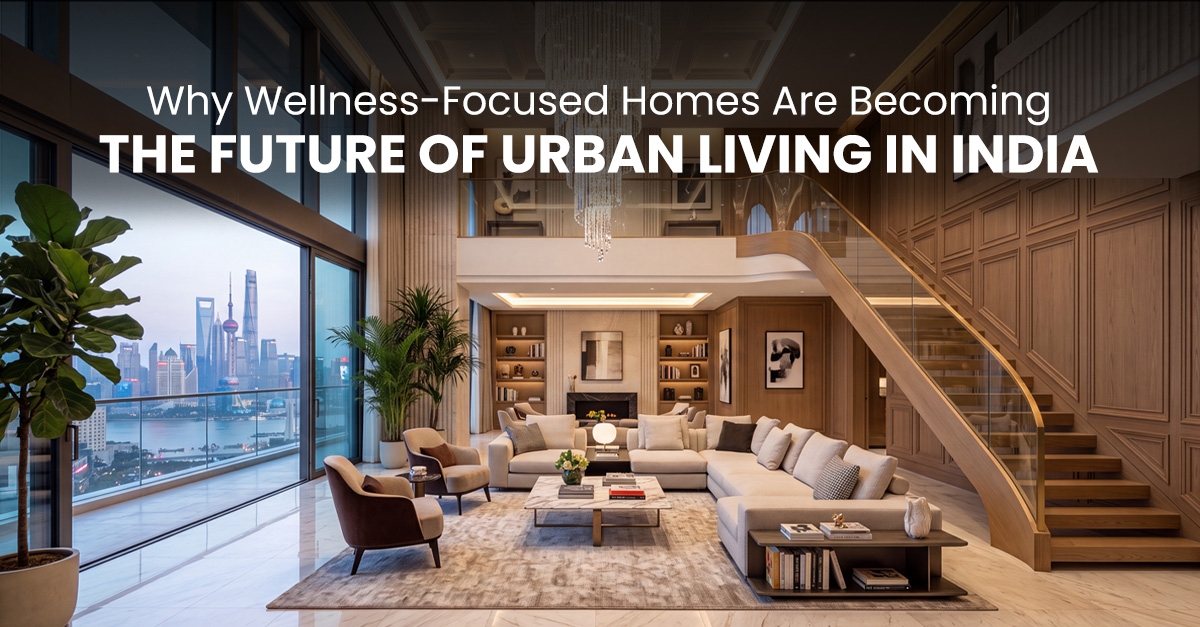
Urban luxury homes in India have always been associated with location, spaciousness, high-quality finishes, and great amenities. However, in the modern day, the criteria for defining a good house are being transformed. People now not only want something aesthetically pleasing; they want something that promotes health and balance.
In the luxury residential sector of India, wellness, sustainability, greener surroundings, privacy and good design are becoming increasingly relevant factors. Recent research and analysis within the industry have indicated an increasing trend for houses based on wellness and health rather than luxury as a visual experience.
This is one of the reasons why wellness-oriented homes in India are becoming a key part of the future of urban housing.
A wellness-oriented house is an architectural design that is made in such a way as to enhance the well-being of its occupants in terms of wellness through architectural design, environment, features and functionality.
Wellness houses in India differ from traditional houses, where wellness only refers to having a gymnasium and swimming pool. There are other ways to achieve wellness in the home environment, such as natural lighting, ventilation, nature, openness, facilities to promote fitness, tranquil places, recreation and socialising places.
It's all about making the residents' lives healthier.
Urban people spend a lot of their time indoors, thereby making the quality of the environment that they live in very crucial. Studies have been conducted on the indoor air quality of Indian cities, showing the significance of knowing the level of particulate matter exposure within the home environment.
With increasing knowledge, factors such as efficient ventilation, proper building orientation, filtration, daylighting, and material selection have become more relevant.
For the contemporary buyer of houses, having a house that is beautiful is not enough. The real question is: Does the house enhance healthy living?
The most prominent trend in the wellness-driven real estate industry is biophilic design, or adding elements of nature to the built environment.
For urban areas, for example, people may lack access to gardens and land that has some nature. However, homes and residential areas can create a solution to that problem using landscaping, botanical paths, green courtyards, terraces, gardens, natural materials and lots of light.
Greenery can also affect the mood of a place. In an urban setting, it would make people feel more like they can break free from the city.
Urban living can be challenging. Commuting time, hectic job schedules, technology overload, and constant city buzz can make downtime more and more desirable.
That’s why real estate developers have begun building in spaces that are meant for just that purpose – relaxation and mindfulness. A place for meditation, yoga, walking or other relaxing activities will give people an opportunity to get away from their busy lives without even leaving their house.
That is to say that in the future, a home will no longer serve merely as a place to which one comes after a long and hectic day.
The transformation is particularly evident in the luxury segment. Recent industry research indicates that health and well-being are becoming increasingly significant components of what affluent Indian buyers consider luxury.
This represents a fundamental change in priorities.
The concept of luxury in the traditional context was defined by its exclusiveness, grandeur, and lavishness. However, the latest trend for luxury homes in India involves merging these attributes with privacy, comfort, greenery, leisure, and wellness features.
The inclusion of a fitness centre is no longer enough. Instead, a holistic fitness ecosystem that includes walking paths, sporting facilities, and a yoga area, among others, should be incorporated into one’s daily routine.
Even a landscaped garden is not mere decoration; instead, it is a place to walk, to stop, to talk, or to spend some peaceful moments there.
The future of wellness real estate in India is also intricately linked with sustainability.
Energy-efficient systems, sustainable water use, natural ventilation, sustainable building materials, and sustainable landscapes are elements which can help in achieving both sustainability and comfort.
This is important since people now want houses not only because of their sustainability but also because of the comfort that they offer to their occupants.
In other words, sustainable housing in India is no longer only about sustainability alone. Sustainable housing design in India can actually enhance comfort as well.
The Monogram Collection, located in Lokhandwala, Andheri West, provides a unique case study of the integration of wellness and lifestyle in modern luxury residential projects.
The project is notable for providing 50+ amenities, including Zen Garden, Yoga and Meditation area, Community Green, Botanical Walk and Fitness Track, as well as facilities for recreation and socialisation like Sports Arena, Infinity Sky Pool and Sky Lounge Pavilion.
The focus on customised layouts and low density also indicates the shift toward homes designed according to the specifics of people’s lifestyle.
Such projects gain their importance not only in terms of providing numerous amenities but also in bringing various elements of wellness closer to people’s lives.
As urban living in India continues to evolve, future homebuyers are likely to look beyond conventional specifications and ask more lifestyle-oriented questions.
They may increasingly value:
The important point is that wellness should not be treated as an isolated amenity. The strongest wellness-focused developments will integrate it throughout the planning, architecture and resident experience.
India's urban spaces are getting denser, more interconnected and faster. In the context of increasing demands from city life, the importance of the home in balancing out these aspects will be greater.
This turns wellness not into a fleeting trend in the real estate sector but into a wider shift in the perspective on quality of life.
The future of residential design could thus be about improving experiences rather than adding more functions. Residential spaces that successfully integrate good architecture, nature, playfulness, sustainability, privacy and community can provide something quite precious - a living space designed around the person as a whole.
The future of urban living in India will undoubtedly involve a greater appreciation of what a home means beyond location, design, and luxury.
Wellness, sustainability, landscaping, privacy, and comfort are becoming an increasingly important part of what constitutes good residential living.
A wellness-focused house in India is simply a home that goes above and beyond to improve the quality of people’s lives.
In adopting this kind of thinking about homes, wellness could become a defining attribute of the future of Indian urban housing.


